Talk – Don’t Text, Love Mom

Okay, we’ve all read those articles that say the younger generation is losing the ability to communicate face to face.  Now, I imagine that those issuing the scary news are from some ‘far older generation’ – the same writers that speak of the perils of Facebook but have never been on it – not even to ‘creep’ on their kids.  But could there be some frightening truth to their suspicious warnings?

If my kids are texting under the table when they are out with their friends, I could be the one their sending their message to, and vice versa (though I try to be more discerning).  I’ll be going about my day, taking care of business and my mind will drift to thoughts of one of them.  It’s no secret that I miss them.  I mean, I write this blog for whoever to read about how – after having  spend twenty-four years in a crazy whirl wind of raising four kids and having all four move out and away – it is now impossibly hard to not be part of all that.  So I am a efficient, speedy text-er.  But a fifty-one-year-old text-er.  I use punctuation and capitals and my iphone spells for me.

My kids and husband came to texting before I did, and back in the day when they did it while at the same time pretending (poorly) to be conversing with me, I would reprimand them and plead, “Love the one your with.”  I imagined it to be what Miss Manners would suggest.  But what would a young Miss Manners with an iphone say in 2011?

I found this gem on an texting etiquette sight – Reading and sending texts when with someone else (while on a date, for example) tells the one you are with they are less important than the one you are texting.  This doesn’t apply when just hanging out with others. WHAT??  I guess my kids and their friends are absolutely always just hanging out.

So having admitted my texting habit I still wonder what all this texting is about?  Could it possibly be that we don’t want to bug our friends and family with a phone call that might demand their time and attention so decide that a text would be preferable – ie. la de da – respond as you can.  Or, worse –  I can’t be bothered with your chat so if I send this text and you send yours we can still occupy ourselves with our more crucial tasks – like texting someone else and waiting for the little ding-ding of them clicking an answer back.

I’ll admit, too, that I’ve wandered around with my hand in my pocket holding my smooth shiny iphone, comforted stupidly that someone I love can send me a little message or a request for some mom advice.  Is it possible then that we are starting to prefer texting to talking?  Am I?

Just last week I was in Vancouver visiting my kids and lovely grandbaby.  My daughter and I decided we were curious to come see the apartment my son had moved into with his girlfriend.  I texted said son our request, along with an offer of a bottle of wine before I took them all out for dinner.

I texted him, “What time works for dinner?”

He texted me, “7:30.  N has a midterm tomorrow.”

I texted him, “Do you have a restaurant in mind?  Chinese?  Indian?”

He texted me, “How about German expressionism?”  (Sassy guy.)  “Or there is a neighbourhood bar called Malones.”

I texted him, “Remember we have the baby.”  And then I thought, this is silly, and picked up the phone.  We chatted.  We sorted out our evening plans – in less time than all our fingers could tap tap tap out the words.  The texting has the satisfying ding ding – here I am responding again – but talking, with more than 140 character answers, involved my son’s voice and eager laugh and did so, so much more to brighten my day.

The Last Ungainly Swing Dance

When , Lily, the baby of our family, asked if she might take part in a foreign immersion program in grade eleven, my heart stopped beating.  If the youngest of our four kids left at only 16 years old – her Dad and I would be sitting smack in the middle of a shockingly empty nest.  Our friends and family couldn’t shut up about the EMPTY NEST prospect, constantly reminding us that it loomed around the corner.  What was with that?  Were they all watching to see how we would replace the noise, and chaos, comings and goings, organizing and meal planning, and endless discussing that goes on when you have kids at home?  Were they waiting to see how we would manage when too many of our evenings and weekends became unfathomably quiet.  Their curiosity was well founded.  I pondered that uncertain future along with them.

After two decades of kids, kids, kids swarming around us – what the hec would we do?  I might have suggested we take up ballroom dancing – seeing as we are so often hanging out in ballrooms, but I had already played that card.  Apparently, around ten years into a marriage it was what wives got husbands to do.  It felt like such a coup when Will agreed.  His not wanting to do it previously, didn’t translate into him not being able to do it. Will fox trotted and two stepped, and cha cha cha –ed across the gym floor with the rhythm and musical ease he was born with, sometimes with the wiry male instructor, after he’d given up on clumsy, impossible to teach, tone deaf me.  I sympathized with our kids who always had to beg me to let them quit any activity –  music lessons, karate, choir, baseball – whatever.  Will made me stick out that ballroom gig right up to the last ungainly swing dance.

One of Will’s younger work colleagues suggested we get a puppy.  Her parents had fostered puppies when she and her siblings all left home.  She couldn’t know that Will and I are considered by some of our nearest and dearest to be anti-pet.  These friends have been known to get all misty-eyed and accusatory and say, well, I know you hate my dog.  Hate is a strong word, and hey, if I lived in the country I might even acquire a dog to protect me from all the things in the country that make a doggie bark at night.  Most of my reluctance to the city dog, has to do with the poo (and maybe the hair on the couch, slobber on my leg, and kibbles everywhere.)  So no ballroom dancing or puppies to fill the emptiness we might feel sans kids at home.

The year I turned forty-eight, I took lessons in both knitting and outdoor in-line skating.  In-line skating was okay, but I’ve yet to find an in-line skating partner. Knitting passes the time on planes and long drives.  That same year Will bought his dream machine – a midnight blue sports car.  Will confessed that while he was aware that young people did knit, watching me knit made him feel old.  He failed to understand that driving in the low slung car made me feel old, too.  I had to concentrate to gracefully get in and out of it, but also, I tried to explain to my oh-so proud husband, that when we drive down the street, radar detector on, seventies music blasting, I am on to the meaning of that visual double-take pedestrians give us.  It says – was that an old guy, who can finally afford a cool sports car, playing old guy Led Zeplin tunes, and if  it was, I don’t have to be envious because I’m not old yet (glance again) yes, it was, old indeed, oh and look, his wife is knitting. So I suppose we will be diverted from our emptynest-ness by planning two-seater driving trips to places old people go – Waterton Park, Yellowstone Park, and Mount Rushmore, while I knit loose lope-sided teeny sweaters for Zoë’s friend’s new babies.

My approach to Lily’s request to do the immersion program had been completely hands off, not wanting the blame in any way should she call from a far away place to say she was so, so sad and lonely.  Maybe the whole foreign immersion idea would fade away, as teenage ideas often do, before being replaced with the next half-baked scheme.  But Lily was a take charge kinda girl and had the whole application process rolling neatly along on her own, right up to the day we received a phone call to say that the Cultural Immersion people needed to send a staff person to our home to interview Lily, Will, and I as part of the in-depth study of the prospective applicant.   My brain whirled – could this be our out?  Could the wrong answers spare Will and I the possibility of more badly chosen classes or fostered pets and keep little Lily home with us?   Tune in to Thursday’s post to find out….

Assignment Mom


The flight of our eldest three children from the nest left Lily, the baby of our family,  holding together the mother lode of mother.  She’s was a good kid – quite mature for only almost sixteen.  But then she had the luxury of being witness to half a decade of adolescent angst, first loves, soul crushing rejections, minor criminal activity and mood swings in our lively home.  As a result, at sixteen she was a fairly responsible girl.  Her siblings recognized that, and in their absence they handed her a hefty assignment:  take time out from hang’n with your friends, and allow mommy to mommy-you.  It might keep a check on her email-stalking.  (I hadn’t discovered texting yet.)

Lily would call at the end of a chilly school day and ask me for a lift home.  My deal always was that I would help them get to school – I was at home with a car in a household struck with early morning tardiness – but they had to find their way home from classes on their own.  When Lily called for a ride I’d perform the obligatory hemming and hawing, especially if she’d caught me half way across the city, and then I’d easily give in.  Or after she’d headed downtown with friends to hunt for the newest must-have alternative rock CD, or to peruse the vintage clothing shops, she would phone and ask if I was hungry.  Did I want her to grab us a table at that Latin place on Fourth Street we like, or maybe the coffee shop on Thirty-third with the nachos and good lattés, so that she could tell me how her day went?

There was a time back when three or four of them were still living at home, when I would have been too busy racing between after school activities to indulge one of them with a slow meal in a nice setting.  I suppose no one was inviting me to do that back then either, though.  No one was on Assignment Mom.

I’ve been known to direct the rest of the family to be cautious of how we treat the baby of our clan, “Don’t pamper her.  You’re not doing her any favours,” I’d say.  But the tables had turned on me.  One afternoon Lily overheard me joking with a good friend, none of whose kids had flown the coop yet.  “This is what I suspect happened,” I conjured, “when Lily’s siblings made their whirlwind visits home at Thanksgiving, they took their baby sister aside, and to keep the swarms of my emails to the away kids at bay, they’d whispered to her, “Do us a favour, Lily.  Indulge Mom once in a while.  Let her buy you lunch.  Tell her all your troubles.   Pamper her.  Really, it’s good for her – and us.”  In response to my friend’s laughter Lily stuck her head into the kitchen and categorically told me that our mid-week dates were always her idea, and that nobody had to make her hang out with her mom.

And in fact, those dates on Fourth St. or Thirty-third with my dramatic youngest detailing her day, while we sipped virgin Margaritas or steaming lattes, were occasions I wouldn’t have forsaken for all the world.  The truth was that Assignment Mom, voluntary or not, worked for both of us.

A Cacophony of Communication

At eighteen I embarked on a three month backpacking trip around Europe.  I made the brief echo-y phone call to my parents upon my arrival in France, to indicate that I had not disappeared over the Atlantic Ocean.  There were letters and postcard but no other spoken words for those ninety days. Perhaps those were the golden days of parent/child relationships and we’ve fallen back into a cacophony of communication.

Neither of my boys are overly communicative, still I like to think that they are within the normal range of same-age males when it comes to co-operating with their mother’s need for information and dialogue.  At age nineteen when Cole set off on his own trekking trip through parts of the United States, I would have lost less sleep and kept my blond hair blond, rather then tipping to gray, if we could have magically returned to those pre-cell days of my youth.

After a successful but uninspired term at university, Cole had taken another gap, that worrisome break in continuity. The afternoon he left for the U.S of A, his fourteen-year-old sister, Lily, and I were sitting outside in the warm autumn sun, commiserating on how great it seemed to be Cole just then.  He had just finished packing up his friend’s Chevy van.  His traveling companion, George, advised him to empty his suitcase’s contents into the drawers in his organized van, and leave the luggage behind.  The two boys posed while Lilly took photos of their departure, then they shooed her off and turned the van south towards the United States – the land they thought they knew through a thousand movies and every episode of The Simpsons.  They would take the number two south, entering the U.S at the Butes, Montana crossing and wind their way to Salt Lake City, Utah, where Cole wanted to purchase a real tight video camera.

Cole called on Halloween night, music blasting in the background.  He was getting sweet video footage on his new camera of a huge parade, though he confessed that earlier they had slipped down the wrong road in that unfamiliar city and things had looked sketchy.  I warned him to be careful about whose face he stuck that camera in.  And please do nothing sketchy, I didn’t want to hear about sketchy.

Hudson, only seventeen, but away at university, was even less inclined to ever call just to chat, but on that night he called to ask if we would be okay with him dropping two full term classes as he really didn’t like anything about them. Of course, we weren’t okay with it.  Also, he told us, his friend M from Calgary had moved out there unexpectedly, and the two of them were thinking of getting an apartment off campus.

On November first I received another call from Cole.  He told me that unfortunately things had got sketchy. George was not happy, wasn’t sleeping or feeling well, and just wanted to return home.  The boys, friends since forever, were trying to work out a solution. George agreed to drop Cole at whatever mountain destination he wanted to go to.

I was beginning to dread the phone calls.  Hudson called to ask me to send him his resume off our home computer as he was applying for a job, in case he dropped half his courses.  Replace the courses you don’t like with something you’re passionate about learning, I said.  I suspect my kids hate it when I start talking passion.

In the meantime George had dropped Cole off in Mammoth, California.   Cole loved it there – it reminded him of Whistler.  He’d met people from New Zealand and had gone skateboarding with some Americans.  And he said he met a nice Navajo guy who told him he got peyote for free because he was Navajo.  (These phone calls had me wondering just what kind of an out-of-body trip I might sink into with a little peyote myself.) And he met a woman on the street who said maybe he could live with her.  (What?)  He described her as old, and said he thought she was lonely.  I told him that seemed weird, and he should be suspicious.  He quoted me something about riding two horses at one time – you can’t ride Faith and Worry both – you have to ride Aware.  (Fine, I will ride Worry for him.)  He had been offered a job busing at a hotel restaurant and another job at a gym, as well as one at a skate shop, but all of them said he needed a visa.

Now I was making the phone calls.  Twenty-four hours later he had moved in with this older woman. Her house was pretty messy but they were cleaning it – he said it was his idea. (How messy, I asked?  Eccentric scary messy?) He said she had never discussed rent.  And she isn’t a cougar? Or pedophile? I asked.  No, he told me, I needed to chill out. She was just really, really nice.

The next day, jolted by early morning worries I called Cole to tell him he needed to tell me exactly where he was, what was this woman’s name?  He said her name was Annie and she lived near the Harry’s Donut Shop in Mammoth Lakes and drove a delivery truck.  Look Mom, I’m just trying to decide what to do here, he said. If he couldn’t get a job without a visa maybe he would go back to Whistler, in British Columbia, where he had heard there was already snow.

November seventh and Cole called to say he was in a car driven by a new buddy named Mosses (with Cole there is always a new buddy).  Cole had agreed to pay the gas to and from Whistler if Mosses would drive him there.  They were in a car which belonged to the sister of Cole’s Navajo friend.  He (the Navajo guy), not the sister, lent it to them.  They were close to Seattle.

An hour later – Cole called to say they had a problem – the police had stopped them – just to harass them he said, but they believed that when that happened Mosses put his wallet in his lap and then it fell out of the car six hundred miles back where they had stopped for gas.  Not having ID Mosses was now going to drop Cole at the border crossing closest to Vancouver.  Cole wanted his sister Zoë’s number to see if one of her friends in Vancouver could pick him up at the border (he had a lot of gear and his belongings in large plastic bags).

Another hour went by and Cole called to say they had reached the border but things weren’t good.  Mosses drove too far forward in his attempt to drop him off and had entered Canada accidentally.  Cole admitted to low balling the price of the video camera he bought in the States – just for a minute, he emphasized, before he saw they were going to be questioned thoroughly, but then both he and Mosses, the car and their bags, were being searched.  (Is this what I signed up for nineteen years ago?  To help my kid, looking like a bag person, lying (for only a minute, of course) get back into the country?)   Be polite and honest, I said.  Didn’t we tell you to be careful at the damn border?  They’re talking to me again, Mom.  Gotta go, Mom.  Gotta go.

An hour later Cole called again suggesting that maybe he better speak to dad.    They were trying to trip him up – they’d asked why he wasn’t with the person he drove into the States with (maybe George saw all of this coming). The horse shoe up Cole’s ass, as they say, and his people skills, were clearly not working for him.

I tried unsuccessfully to get Cole’s dad at work.  Cole informed me that his friend Brian’s dad, who lived in Vancouver, was driving to the border to pick him up. I was so, so grateful for Brian’s dad, whoever the hec he was, and glad Cole had the people skills he had, or this could have gotten far sketchier.

Another call from the other son – Hudson wanted to tell us he now had a job at a pizza place and that he wouldn’t be able to come home for reading break the following day as planned.  I assured him he could get another such job and told him that in case he decided he needed a break, I didn’t say – a break from  being seventeen-years-old and away for the first time, and overwhelmed by school work that should have been easy for you, and uncomfortable in residence –  in case he needed a break from all that, I wouldn’t cancel his plane ticket until the noon deadline the next day.

With all of the kids away but Lily, she got to be the target of my frustration.  In the time it took me to drive her to school while she ate her Cheerios and brushed her teeth in the car, (aiming I believe for yesterday’s spit spot out the window) I lectured her on how she would have no choice but to start university and finish it or not to bother going. As I let her out of the car, Hudson called to say the pizza place said he could start after reading break and yes, he would like to come home.  Cole called from Vancouver, where he had already been to the American Embassy to apply for a visa to work in Mammoth, California.  (Do they give visas to nineteen-year-olds when the job offer they want the visa for is in a skate shop?)

We picked Hudson up at 9:35 pm and talked about how he didn’t have to decide about what he would do in January just yet.  I cooked up a batch of sticky chicken wings for Lily and Hudson and he talked about his desire to maybe go to India or Tibet after he made some money in Calgary.  It had been a sketchy two weeks of connecting with the boys. Would it be easier if we weren’t linked by cell phones with updates on Californian cougars and borrowed cars entering the country illegally?  What sort of distressing phone call might I get from a kid in Tibet?

Gathering Twigs and Sticks and Bits of String

Emptying the nest.  I  fought that concept tooth and nail. My strategy was to refuse to empty mine without building others.  When our eldest daughter, Zoë, left home I masked my fear and insecurity around letting her go by setting her up in her little apartment with every single necessity I could get my hands on.

It was all so psychological – the building of that satellite nest, Zoë had never considered a gap year, but she was our first born, and a daughter – and I do buy into all that birth order pseudo science. But the gap had been just the ticket for Cole, son number one – so why did I hesitate to bring it up with Hudson, our second son?  What unprecedented fear makes us crazy parents so darn relieved to get them back into school after one short summer between high school and post-secondary?

Hudson is a philosopher, was born a philosopher, in fact.  When his kindergarten teacher asked him what he wanted to be when he grew up, he said, he wanted to go inside of people.  “Like a doctor?” she asked.  “No,” Hudson said, staring at her through the lenses of his tiny wire rimmed glasses, “no, I want to be really small and see what it’s like inside there.”  Cole once commented that when other kids got heavily into drugs in high school as an escape or dive into alternate reality, his brother Hudson, got heavy into philosophy, Buddhism, Hinduism, Sufism, Taoism, existentialism – all the isms.   So there is no question that he was a deep thinker but, he was just seventeen, I tell others now.  What was I doing encouraging a seventeen-year-old boy to move away from our boisterous house to go off on his own to study?  The poor kid couldn’t say, “I’m too young to do this.”  Boys don’t say things like that.  I should have clued in to Hudson’s reluctance by how impossibly uninterested he had been in packing for his new life style until the day before his departure.

The ‘launch’ wasn’t getting one bit easier for me.    Delivering him to his tiny dorm room in Victoria, B.C.  – a province, a mountain range, and a bit of ocean away from home, I was coming to grips with the idea that I was going to let another one of my kids go and was in full let-me-replace-myself-with-fuzzy-blankets-and the-right-supplies mode again. Only damn it, there wasn’t a blanket fuzzy enough.

My boy was patient with my hanging around town for a couple of days taking trips to the mall for various new nest necessities. On my last night in Victoria, after an Italian dinner downtown, I took the scenic drive along the ocean on the way back to the university, prolonging the moment that I had to leave him and overwhelmed with an urge to review all parental lessons at break neck speed.  I covered; responsible drinking, meaningful relationships, and even safe sex in a couple of blocks.  “They handed out condoms at orientation,” he said, cause me to shift gears, searching for a big life motto, something you would tell Oprah was the truism your mother taught you.

“Don’t be surprised if you get a low mark on your first paper,” I said instead. That happened to me a zillion years ago.  I was shocked but I talked to the prof.  You have to talk to the prof.”

“I don’t intend to get low marks, but I’ll do something about it if I do.”  Bless him for his confidence.

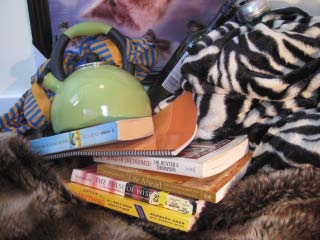
I pulled up to his building and he hopped out.  “I have to get my kettle from the trunk,” he said. He had recently started drinking tea.

“I have a few other things for you,” I told him.  “Laundry detergent, computer paper, an extra pillow, and mugs.” … and all my needy love that was going to explode when he popped opened the trunk.

I stepped out to hug him and whispered my goodbye against his cheek, surprised again by the bristle of blonde whiskers there.

“I’ll miss you,” I said, “but I’m okay.  Really I am.”

“I know,” he reassured me, walking away, with his kettle and tea, my son, the soon to be overwhelmed philosopher.


Gap or Gorge?

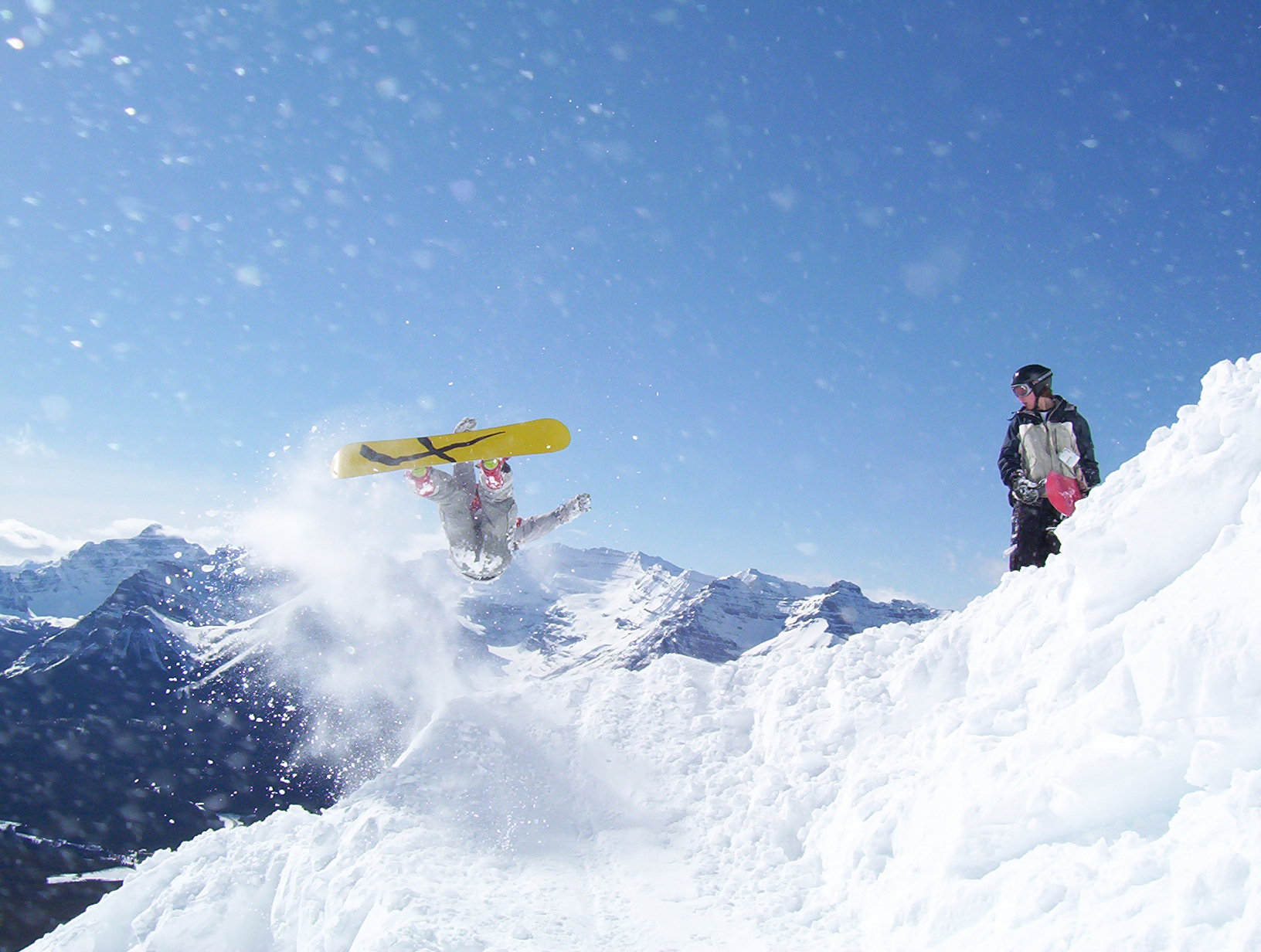
Two weeks shy of his eighteenth birthday our eldest son landed his dream job. Whistler Blackcomb resort had held their hiring fair in November, but warned potential staff that they wouldn’t actually be working until there was sufficient snow. After spending his meager savings on the flight west and accommodation while waiting desperately for snow, Cole found himself with the highly sought after position of liftie, or as he stated in subsequent resumes he was responsible for the safety and operation of the fastest upload capacity lift in North America. Our ecstatic boy was able to snowboard from the small apartment in staff housing that he shared with two strangers from Quebec, to his position at the chair lift, stationed at the top of the mountain.   He was so high up that he actually had cell service, nothing else was interfering with the signal up there, and he would occasionally call me before the first skiers showed up.  “Mom it’s sweet up here.  The sky is pink, seriously pink, and I can see over half a dozen mountains.  It’s cool.”

“Should you be on your phone?”

“No, but who would know?  When there’s no one coming up the lift it’s, I dunno know…lonely.  I mean, it’s just me.”

Cole called often in the beginning, justifying his need to make contact with some request, could I send Cd’s he left behind,  or he’d make an appeal for super warm gloves from a camping store.  Other times he would call and ask to speak to his brother, and eavesdropping I realized he was sharing the wilder aspects of being a liftie that I wasn’t privy too.   At the same time that he gained a few dozen new friends his cell service became less reliable.  I’d interrupt him trying seven-twenties in the snowboard park, his friends shouting in the background, or at a party any night of the week, a rapper rhyming nearby.  “Sorry Mom, I think I’m losing you,” he’d shout.

“Everything’s cool, Mom.  You’re breaking up,” he’d say and I was supposed to believe he was out of cell range when he lost me.

Yet as the winter carried on, working alone at the top of the mountain got lonelier, and the nights, in contrast, were perhaps too chaotic, if that were possible.  Cole came home in the early spring determined to save up for one more adventure.  His job, bussing tables at a popular bar on Calgary’s now famous Red Mile, was cut short by an Easter snowboard accident that left him with a cast on his arm and time to contemplate his new fascination with Buddhism.    Despite his Buddhist teachings he was distraught.  His year hadn’t gone as planned.  He had the itch to further his travels.  He wanted to be able to work despite the broken limb.  He suddenly ached to return to the freedom he’d known on the slopes of Whistler Blackcomb, which while not Belize, or remote Chili, represented a Mecca of sorts for him. It was there he’d first lived on his own, amongst a community of his peers, and there that he’d escaped the confines of his parents rules and learned to make a bean and rice wrap.

Never-the-less, with his one good hand he typed up the application to university in our hometown of Calgary.  We held our breath.  He talked more of Whistler, of the power of the sunrises over the peaks, of the new friendships forged.  Forward, we had whispered into his ear.  “Talk to your big sister Zoë.  Zoë loves being a student again.” (Of course, Zoë always liked being a student.)    “Try university.  Study whatever you think you’d like.  The boy/girl ratio is two to three.”  (We were desperate.)  “You did Whistler. You worked.  You broke your arm.”  Of course, all the while we wanted him to believe he was coming to the decision himself.

He sat in the sun on a summer’s day and chose courses – an eclectic array of mind expanding areas of study.  Still he wondered whether he shouldn’t take more time off, make the gap larger – let it turn into not a gap but a chasm, an abyss, a gorge … 

He thought the three day university orientation would be lame, but instead it was cool.  The way he went on to Hudson, who was beginning grade eleven, about the kids he knew and the tight barbeque and how he, Cole, (the guy who would switch from general studies to film production) got on an outdoor stage at some point and addressed his peers, you’d have thought I’d slipped him twenty bucks to influence Hudson to earn the marks to get there.

I drove Cole to his first day of university (how could I refuse?).  On the way up I told him I was proud of him for reaching this milestone.  “I guess,” he’d said, adjusting his hat.  He’d picked out his first day ensemble the night before. The look was casual with a hint of mystic – a 1940’s style gangster hat and 1970’s aviator classes, his dad’s  plaid shirt from some other decade, his brother’s jeans from this decade, and his very own new running shoes.

We pulled into the campus behind a line of cars driven by this generation of hovering parents.  I tried not to say too much.  Cole gave me a big grin before skateboarding away from me, asking directions from the first friendly looking girl he spotted on the fly by.  For a few minutes after he disappeared from view I let the car idle before driving off.  We’d done it.  We had made it through Cole’s gap year.  So why then couldn’t we trust our instincts when it was Hudson’s turn to have a gap, instead of leading him down the path to a trying experience?

To Gap or Not To Gap

Having had to sweet talk Cole, Hudson and Lily into beginning a university education I have come out strongly in favor of the gap year.  I remember reading about Royal Prince William’s gap.  He was taking a year off between completing his high school A levels and beginning his studies at Scotland’s St. Andrews University.  Prince William was going to fill his gap by; working on a UK farm, teaching English in a remote part of Chile, hunting on an African Safari, and trekking in Belize with the Welsh Guards.   Cole’s plans weren’t so lofty.

Of the many definitions for ‘gap’ in the Webster’s dictionary the most appropriate is – a break in continuity.  Cole’s father and I verbalized our support for the gap, desperate for it to lead our energetic son to decide with conviction, “Man, I want to go back to school.  I ‘m so down with getting on with my education.”  It seems there has to be a certain rhythm to the gap.  You want them to work hard at low paying jobs  – like the UK farm perhaps in Prince Williams case, but not spend too much of their earnings or time crowd surfing in mosh pits, drunk with freedom away from math homework and biology tests.

My father had feared the gap for his kids.  I graduated in 1977 from the same high school that Cole attended.  When I should have been studying for my own grade twelve final math exam, I had been stretched across my girlfriend’s bed listening to Elton John belt out Goodbye Yellow Brick Road and daydreaming about climbing the Eiffel Tower, and eating real Italian gelato –  as soon as our summer jobs had earned us enough to purchase; airfare, a youth hostel card, a Eu-rail pass, an awkward and heavy pack back, and the requisite pair of hiking boots.

Flying across the Atlantic Ocean I left the coziness of my parent’s house – where not only was there a meat and potatoes dinner on the table every evening, but my siblings and I had the luxury of cruising around to our friend’s homes in my dad’s Chrysler LeBaron.  Criss-crossing Europe I learned to stretch my food budget by eating a whole lot of bread and jam, and to decipher train schedules in a half dozen languages, all with little communication with any one at home – no texting for us.  Like a kazillion young Canadian (and Australian) kids, Cole’s dream was to spend a winter at a ski resort with a job on the mountain, living like a bohemian.  We were okay with that plan in a shaky parental-milestone way.

A university campus might have been a safer environment for the exploits of a barely eighteen-year-old boy intent on snowboarding through the winter with a pack of other hearty bohemian wannabe’s. (Three of my four kids graduated six months shy of being eighteen.  Warning – when thinking your chatty, obviously smart four-year-old is ready to start school – instead of calculating whether you want your little one to be the youngest one reading in grade one, figure out whether he should be the youngest drinking, smoking and asserting himself as a teenager in grade ten?)

While many of Cole’s friends were saving hard to travel to Thailand or Australia as their gap destination, Cole felt suitably wealthy with $900 in his bank account to set out for the Whistler Blackcomb resort to make his mark on the world.  With his room empty of his boarding gear, CD’s, guitar, and hacky sack collection, Cole was sitting on his duffel bag programming his new phone with a pensive look on his face.

“Do you feel kind of off- balance?” I had asked him.

“Shit Mom, yeah.  But why?  I’m so ready to do this.”  I told him that my dad had explained it to me years ago with an analogy.  We all have dens where we’ve matted down the grass and we’re comfortable in them.  Cole was leaving his den, and he didn’t have a new one yet. I told him Grandpa’s theory was that until he got comfortable in a new den and got the grass matted down there, he’d feel unsettled.  “Word, Mom,” he said.  “That’s good.  Yeah, I get that.”

Who would have guessed that the WestJet agent would be the guy to make me cry?  But here my oldest boy was, having just shaved off those hairs from his chin, that weren’t really whiskers yet.  The agent was explaining in a respectful, but detailed way; the gate location, baggage tags, and boarding time, aware that Cole, attempting to appear so casual wasn’t a seasoned traveler and was having trouble concentrating.  I blinked, and blinked, and blinked back tears.   It’s not that I don’t want them to grow up.  Growing up is okay, but watching my second child heading toward airport security didn’t make me feel at all secure.

I had launched another kid. I was stunned by how fast it had happened.  Cole was a small mammal looking for a den and for a while I would be that mother bear again.  I was going to lumber about in circles for a week or two, bewildered and confused, clinging to my cell phone and to the two younger kids left at home…

Stay tuned for  Thursdays blog – ‘Gap or Chasm?’

Phone-less in San Francisco

Seven P.M. on a Sunday night my twenty-year-old daughter calls,  obviously near tears.  “Someone stole my phone,” she cries.  “I feel so cut off without it.”

But she is on a phone, one the cell company she’s been dealing with, has given to her.  Born in 1959 myself, it takes me a minute to catch up.  It’s not the phone, it’s the information in the phone.  “I feel like I have to start over meeting people, making contacts.  I feel so alone again, Mom.”

“Honey, honey, I get that you’re upset.  But those people will call you.  You’ll get your numbers again.”

“Mom, it doesn’t work like that.  I’ve done this enough to know lots of those people were never going to call me.”  What she’s done enough, is move around, this daughter of mine.  This is the third time in her young life that she has by choice surrounded herself with absolute strangers – situations where she had to work to have even a single friend.  From our home in Calgary, at age sixteen, she bravely did a high school exchange in Rome, Italy – isolating herself further by having to learn Italian.  Her siblings went to school on the west coast, but she headed east to Concordia University in Montreal.  Now, trading another cold Canadian winter for a foggy one, she was taking part in Concordia’s school abroad program by doing a year at SFSU in San Francisco.  “People here have their own friends.  I’m the new one.  I have to call them,” she explained further.

I was alone in our renovated, too big house, when she’d called.  Her dad had taken two of our nephews to an early hockey game.  The weather outside was shifting, from a Indian summer to light flurries.  Earlier I’d been in the yard pulling down sweet pea vines and raking leaves, and wishing I was cooking a Sunday dinner like some of my friends would be, for kids who stayed in the city for jobs and school.

“What are you doing right now, Mom?” she asked quietly.

“Missing you guys.  Dad’s gone to a hockey game.  I was going to make toast but the breads gone moldy.

“Mine too,” she said.  “My bread’s gone bad, too.”

“I guess we need each other to finish a loaf of bread,” I said, from where I watched the sky turn dark outside the living room.

“Yeah, we do.  I miss you guys so much.”

“You’ll get your numbers back, Lily.  You’ll run into people.  And some friends will call.  It just seems bad now.  I’ll email you Zoe’s and Hudson’s and Cole’s and your cousin’s numbers.”

“Will you do it now?”

Of course, I told her, yes, I’d do it right away.  And I would add a note to her email, about how brave she was, and how I knew the next time we talked she would be okay again, having found her friends.