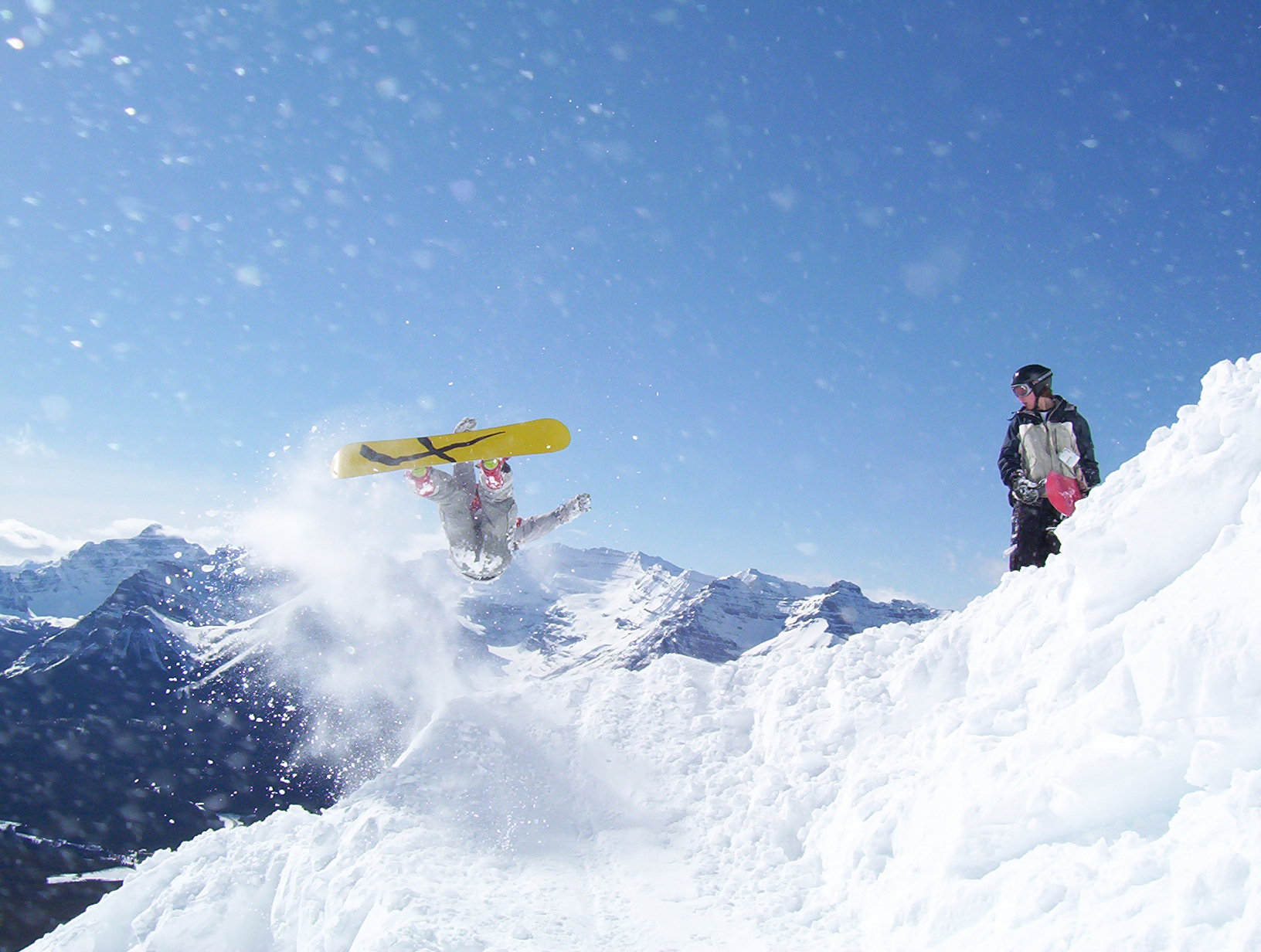
Frozen Toothpaste Spit

Mornings for our family of six were hugely chaotic when we were all younger.  I don’t miss the chaos, but rather all that energy.  My husband and I, and our daughter, Lily, developed a routine when the three older kids moved out.  Will left the house just before I had to haul Lily’s skinny butt out of bed, and Lily ate her cereal in the car while I drove her to school. After her Cheerio’s she brushed her teeth, and spat her toothpaste out the car window, ready (late) to do algebra with a fresh smile.

It was less organized when they were little kids, though there was a predictable rhythm to our chaos.  Will and I would lie in our warm bed, allowing the alarm to go into snooze mode.  “We’ve got to get up.  We’ve got to get up,” he always grumbled.   Motionless and on cue, there would be our little Hudson at the bedroom door.

“Is it a school day?” he would ask, wiping away the water rolling down his forehead from his saturated cow lick.  Back then Hudson was our morning child.   I would assure him that it was a school day, swinging on my bathrobe and plodding downstairs, without even splashing water over my squinched up face.  Cole would have hauled his quilt off the top bunk and hunkered down in front of the T.V.  I would go into automatic pilot – new day, same words.  “Cole TV off.  Clothes on, please.”  He’d roll off the couch and stagger into his room while I rushed off to  Zoë’s room.

“Come on, sweetie,” I’d urge, lifting the covers, and just as I would be about to give Zoë’s shoulders a gentle rocking, the veil of sleep would lift and she would get ready to join the din that was fast enveloping the house.  Cole, the son created in his father’s image, would be calling for me to find him socks, while his dad, who denies he’s ever made such a request, would be banging the dryer door and stomping about trying to locate the laundry basket.  My bladder would demand that I pay attention to it but there were not enough wheels rolling.  Everything had to be in motion before I could afford to pause.

Upstairs Hudson would already have a bowl of Cheerio’s.  My legs would circle like the Roadrunner’s as I located the socks for Will, who would be ready to make his exit, barefoot in his suit and tie.  (He’s not a breakfast eater or brown bagger.  Thank God.)  I’d lay Cole’s socks on the table and grab a cereal bowl just as Cole asked for a grapefruit.   My morning aerobic routine would move into full swing. Slice the grapefruit, spin and deliver.  Bend to the refrigerator for the ham and mustard. Long stretch to the top of the stairs, “Zoë, are you coming up?  You should be up here.”  Do the ham sandwich for Cole.  Count – one lunch down, two breakfasts, no kindergarten snack.  Zoë would come up, and I’d shove the Rice Krispees box in front of her.  With everyone in motion I’d race upstairs to use the bathroom, consider my disheveled state in the mirror for a split second, and run back down to the short order station to slap together a peanut butter and jam sandwich for Zoë’s lunch.

Ready before all of us, Hudson would suddenly be missing a school library book that he’d urgently tell me the teacher said he would have to pay for.  “What’s on the cover?” I’d ask and looking uncomfortably warm in his jacket, toque and mittens, waiting for the others at the door, he’d say, “A green pig maybe.”

“It’s under Lily’s bed,” Zoë would tell us.

“Don’t wake, Lily,” I’d warn Hudson, but of course he would and she would be down making some unreasonable demand on me, like a bit of food tossed her way for breakfast.

Hudson would request an apple for his kindergarten snack, instead of the orange I was about to pop into the pack he was already wearing on his back.  I’d take the stairs to the basement two at a time and find the apples were wrinkled, but would decide if I approached from the back I could get one into Hudson’s pack unseen, and throw in some cookies to compensate.

One of Cole’s friends often phoned to offer him a ride with his mother. Theirs was a two kid family – I’d attempt to hustle all of mine out together so they could stuff themselves into that neighbor’s compact car.  But then Cole would have lost a glove and someone else wouldn’t be able to locate her vinyl lunch bag, and on cue I’d say in an exasperated but determined voice, “I’ve had it.  This is crazy.  From now on you find all these things at night.”  Cole loved this particular pair of gloves so he would wear the one he had and put his other hand in his pocket.

“I hate taking paper.  It’s so wasteful.” Zoe would protest, long before paper became taboo.

“Bring it back and I promise to use it over and over and over again.”

By then Lily, would have joined our merry clan, asking for toast and jelly.  “Not now,” I’d tell her too abruptly, and she’d start to wail.

The neighbor would beep a friendly sort of ‘we’re here’ beep.  Zoë was usually last out, and always just about to pull her hat over a coiffure that looked like small animals had burrowed in it during the night, before I noticed and raced for the kitchen comb (once there were even kitchen toothpaste and toothbrushes in my endless attempts to do this better).  Keeping the door open with one foot and hoping I wasn’t exposing myself with my sloppy bathrobe, I’d tug the comb through her hair, one eye on the fully clothed and carefully groomed neighbor behind the wheel of the car she probably had time to heat up, before she loaded the dishes from her boy’s omelets into the dishwasher.

If the perfect neighbor weren’t picking them up they would all make it out to the steps and ask, “Can we walk?” – meaning do we have time? And I would say in a determined voice, “No, we have to change our ways,” and then urge them on with, “Now, run, run, run,” following up, in as calm a tone as I could muster, “Bye, have a good day,” because I felt strongly that something should be calm about their send off.   Still I’d have to direct them, “Go, go, you three,” like a shepherd, blocking off the stairways into the nether regions of the house, shooing them along.

I’d see that poor Lily had again been forced into self reliance and had made herself toast, dripping with blueberry jam, so I’d collapse on the couch, bundling her onto my lap for a bit of the one-on-one attention that we both craved, while I allowed her to feed me.

I did miss all that action years later – alone in the house, home from driving Lily to high school, lecturing her on being late and telling her that her toothpaste spit would still be frozen on the corner of Elbow Drive when she walked by on her way back home.  Weird – but I did miss it.
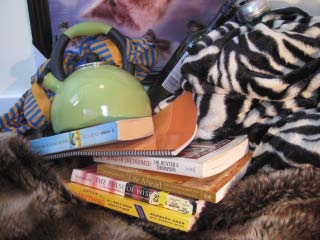
Gathering Twigs and Sticks and Bits of String

Emptying the nest.  I  fought that concept tooth and nail. My strategy was to refuse to empty mine without building others.  When our eldest daughter, Zoë, left home I masked my fear and insecurity around letting her go by setting her up in her little apartment with every single necessity I could get my hands on.

It was all so psychological – the building of that satellite nest, Zoë had never considered a gap year, but she was our first born, and a daughter – and I do buy into all that birth order pseudo science. But the gap had been just the ticket for Cole, son number one – so why did I hesitate to bring it up with Hudson, our second son?  What unprecedented fear makes us crazy parents so darn relieved to get them back into school after one short summer between high school and post-secondary?

Hudson is a philosopher, was born a philosopher, in fact.  When his kindergarten teacher asked him what he wanted to be when he grew up, he said, he wanted to go inside of people.  “Like a doctor?” she asked.  “No,” Hudson said, staring at her through the lenses of his tiny wire rimmed glasses, “no, I want to be really small and see what it’s like inside there.”  Cole once commented that when other kids got heavily into drugs in high school as an escape or dive into alternate reality, his brother Hudson, got heavy into philosophy, Buddhism, Hinduism, Sufism, Taoism, existentialism – all the isms.   So there is no question that he was a deep thinker but, he was just seventeen, I tell others now.  What was I doing encouraging a seventeen-year-old boy to move away from our boisterous house to go off on his own to study?  The poor kid couldn’t say, “I’m too young to do this.”  Boys don’t say things like that.  I should have clued in to Hudson’s reluctance by how impossibly uninterested he had been in packing for his new life style until the day before his departure.

The ‘launch’ wasn’t getting one bit easier for me.    Delivering him to his tiny dorm room in Victoria, B.C.  – a province, a mountain range, and a bit of ocean away from home, I was coming to grips with the idea that I was going to let another one of my kids go and was in full let-me-replace-myself-with-fuzzy-blankets-and the-right-supplies mode again. Only damn it, there wasn’t a blanket fuzzy enough.

My boy was patient with my hanging around town for a couple of days taking trips to the mall for various new nest necessities. On my last night in Victoria, after an Italian dinner downtown, I took the scenic drive along the ocean on the way back to the university, prolonging the moment that I had to leave him and overwhelmed with an urge to review all parental lessons at break neck speed.  I covered; responsible drinking, meaningful relationships, and even safe sex in a couple of blocks.  “They handed out condoms at orientation,” he said, cause me to shift gears, searching for a big life motto, something you would tell Oprah was the truism your mother taught you.

“Don’t be surprised if you get a low mark on your first paper,” I said instead. That happened to me a zillion years ago.  I was shocked but I talked to the prof.  You have to talk to the prof.”

“I don’t intend to get low marks, but I’ll do something about it if I do.”  Bless him for his confidence.

I pulled up to his building and he hopped out.  “I have to get my kettle from the trunk,” he said. He had recently started drinking tea.

“I have a few other things for you,” I told him.  “Laundry detergent, computer paper, an extra pillow, and mugs.” … and all my needy love that was going to explode when he popped opened the trunk.

I stepped out to hug him and whispered my goodbye against his cheek, surprised again by the bristle of blonde whiskers there.

“I’ll miss you,” I said, “but I’m okay.  Really I am.”

“I know,” he reassured me, walking away, with his kettle and tea, my son, the soon to be overwhelmed philosopher.


Gap or Gorge?

Two weeks shy of his eighteenth birthday our eldest son landed his dream job. Whistler Blackcomb resort had held their hiring fair in November, but warned potential staff that they wouldn’t actually be working until there was sufficient snow. After spending his meager savings on the flight west and accommodation while waiting desperately for snow, Cole found himself with the highly sought after position of liftie, or as he stated in subsequent resumes he was responsible for the safety and operation of the fastest upload capacity lift in North America. Our ecstatic boy was able to snowboard from the small apartment in staff housing that he shared with two strangers from Quebec, to his position at the chair lift, stationed at the top of the mountain.   He was so high up that he actually had cell service, nothing else was interfering with the signal up there, and he would occasionally call me before the first skiers showed up.  “Mom it’s sweet up here.  The sky is pink, seriously pink, and I can see over half a dozen mountains.  It’s cool.”

“Should you be on your phone?”

“No, but who would know?  When there’s no one coming up the lift it’s, I dunno know…lonely.  I mean, it’s just me.”

Cole called often in the beginning, justifying his need to make contact with some request, could I send Cd’s he left behind,  or he’d make an appeal for super warm gloves from a camping store.  Other times he would call and ask to speak to his brother, and eavesdropping I realized he was sharing the wilder aspects of being a liftie that I wasn’t privy too.   At the same time that he gained a few dozen new friends his cell service became less reliable.  I’d interrupt him trying seven-twenties in the snowboard park, his friends shouting in the background, or at a party any night of the week, a rapper rhyming nearby.  “Sorry Mom, I think I’m losing you,” he’d shout.

“Everything’s cool, Mom.  You’re breaking up,” he’d say and I was supposed to believe he was out of cell range when he lost me.

Yet as the winter carried on, working alone at the top of the mountain got lonelier, and the nights, in contrast, were perhaps too chaotic, if that were possible.  Cole came home in the early spring determined to save up for one more adventure.  His job, bussing tables at a popular bar on Calgary’s now famous Red Mile, was cut short by an Easter snowboard accident that left him with a cast on his arm and time to contemplate his new fascination with Buddhism.    Despite his Buddhist teachings he was distraught.  His year hadn’t gone as planned.  He had the itch to further his travels.  He wanted to be able to work despite the broken limb.  He suddenly ached to return to the freedom he’d known on the slopes of Whistler Blackcomb, which while not Belize, or remote Chili, represented a Mecca of sorts for him. It was there he’d first lived on his own, amongst a community of his peers, and there that he’d escaped the confines of his parents rules and learned to make a bean and rice wrap.

Never-the-less, with his one good hand he typed up the application to university in our hometown of Calgary.  We held our breath.  He talked more of Whistler, of the power of the sunrises over the peaks, of the new friendships forged.  Forward, we had whispered into his ear.  “Talk to your big sister Zoë.  Zoë loves being a student again.” (Of course, Zoë always liked being a student.)    “Try university.  Study whatever you think you’d like.  The boy/girl ratio is two to three.”  (We were desperate.)  “You did Whistler. You worked.  You broke your arm.”  Of course, all the while we wanted him to believe he was coming to the decision himself.

He sat in the sun on a summer’s day and chose courses – an eclectic array of mind expanding areas of study.  Still he wondered whether he shouldn’t take more time off, make the gap larger – let it turn into not a gap but a chasm, an abyss, a gorge … 

He thought the three day university orientation would be lame, but instead it was cool.  The way he went on to Hudson, who was beginning grade eleven, about the kids he knew and the tight barbeque and how he, Cole, (the guy who would switch from general studies to film production) got on an outdoor stage at some point and addressed his peers, you’d have thought I’d slipped him twenty bucks to influence Hudson to earn the marks to get there.

I drove Cole to his first day of university (how could I refuse?).  On the way up I told him I was proud of him for reaching this milestone.  “I guess,” he’d said, adjusting his hat.  He’d picked out his first day ensemble the night before. The look was casual with a hint of mystic – a 1940’s style gangster hat and 1970’s aviator classes, his dad’s  plaid shirt from some other decade, his brother’s jeans from this decade, and his very own new running shoes.

We pulled into the campus behind a line of cars driven by this generation of hovering parents.  I tried not to say too much.  Cole gave me a big grin before skateboarding away from me, asking directions from the first friendly looking girl he spotted on the fly by.  For a few minutes after he disappeared from view I let the car idle before driving off.  We’d done it.  We had made it through Cole’s gap year.  So why then couldn’t we trust our instincts when it was Hudson’s turn to have a gap, instead of leading him down the path to a trying experience?

To Gap or Not To Gap

Having had to sweet talk Cole, Hudson and Lily into beginning a university education I have come out strongly in favor of the gap year.  I remember reading about Royal Prince William’s gap.  He was taking a year off between completing his high school A levels and beginning his studies at Scotland’s St. Andrews University.  Prince William was going to fill his gap by; working on a UK farm, teaching English in a remote part of Chile, hunting on an African Safari, and trekking in Belize with the Welsh Guards.   Cole’s plans weren’t so lofty.

Of the many definitions for ‘gap’ in the Webster’s dictionary the most appropriate is – a break in continuity.  Cole’s father and I verbalized our support for the gap, desperate for it to lead our energetic son to decide with conviction, “Man, I want to go back to school.  I ‘m so down with getting on with my education.”  It seems there has to be a certain rhythm to the gap.  You want them to work hard at low paying jobs  – like the UK farm perhaps in Prince Williams case, but not spend too much of their earnings or time crowd surfing in mosh pits, drunk with freedom away from math homework and biology tests.

My father had feared the gap for his kids.  I graduated in 1977 from the same high school that Cole attended.  When I should have been studying for my own grade twelve final math exam, I had been stretched across my girlfriend’s bed listening to Elton John belt out Goodbye Yellow Brick Road and daydreaming about climbing the Eiffel Tower, and eating real Italian gelato –  as soon as our summer jobs had earned us enough to purchase; airfare, a youth hostel card, a Eu-rail pass, an awkward and heavy pack back, and the requisite pair of hiking boots.

Flying across the Atlantic Ocean I left the coziness of my parent’s house – where not only was there a meat and potatoes dinner on the table every evening, but my siblings and I had the luxury of cruising around to our friend’s homes in my dad’s Chrysler LeBaron.  Criss-crossing Europe I learned to stretch my food budget by eating a whole lot of bread and jam, and to decipher train schedules in a half dozen languages, all with little communication with any one at home – no texting for us.  Like a kazillion young Canadian (and Australian) kids, Cole’s dream was to spend a winter at a ski resort with a job on the mountain, living like a bohemian.  We were okay with that plan in a shaky parental-milestone way.

A university campus might have been a safer environment for the exploits of a barely eighteen-year-old boy intent on snowboarding through the winter with a pack of other hearty bohemian wannabe’s. (Three of my four kids graduated six months shy of being eighteen.  Warning – when thinking your chatty, obviously smart four-year-old is ready to start school – instead of calculating whether you want your little one to be the youngest one reading in grade one, figure out whether he should be the youngest drinking, smoking and asserting himself as a teenager in grade ten?)

While many of Cole’s friends were saving hard to travel to Thailand or Australia as their gap destination, Cole felt suitably wealthy with $900 in his bank account to set out for the Whistler Blackcomb resort to make his mark on the world.  With his room empty of his boarding gear, CD’s, guitar, and hacky sack collection, Cole was sitting on his duffel bag programming his new phone with a pensive look on his face.

“Do you feel kind of off- balance?” I had asked him.

“Shit Mom, yeah.  But why?  I’m so ready to do this.”  I told him that my dad had explained it to me years ago with an analogy.  We all have dens where we’ve matted down the grass and we’re comfortable in them.  Cole was leaving his den, and he didn’t have a new one yet. I told him Grandpa’s theory was that until he got comfortable in a new den and got the grass matted down there, he’d feel unsettled.  “Word, Mom,” he said.  “That’s good.  Yeah, I get that.”

Who would have guessed that the WestJet agent would be the guy to make me cry?  But here my oldest boy was, having just shaved off those hairs from his chin, that weren’t really whiskers yet.  The agent was explaining in a respectful, but detailed way; the gate location, baggage tags, and boarding time, aware that Cole, attempting to appear so casual wasn’t a seasoned traveler and was having trouble concentrating.  I blinked, and blinked, and blinked back tears.   It’s not that I don’t want them to grow up.  Growing up is okay, but watching my second child heading toward airport security didn’t make me feel at all secure.

I had launched another kid. I was stunned by how fast it had happened.  Cole was a small mammal looking for a den and for a while I would be that mother bear again.  I was going to lumber about in circles for a week or two, bewildered and confused, clinging to my cell phone and to the two younger kids left at home…

Stay tuned for  Thursdays blog – ‘Gap or Chasm?’

Phone-less in San Francisco

Seven P.M. on a Sunday night my twenty-year-old daughter calls,  obviously near tears.  “Someone stole my phone,” she cries.  “I feel so cut off without it.”

But she is on a phone, one the cell company she’s been dealing with, has given to her.  Born in 1959 myself, it takes me a minute to catch up.  It’s not the phone, it’s the information in the phone.  “I feel like I have to start over meeting people, making contacts.  I feel so alone again, Mom.”

“Honey, honey, I get that you’re upset.  But those people will call you.  You’ll get your numbers again.”

“Mom, it doesn’t work like that.  I’ve done this enough to know lots of those people were never going to call me.”  What she’s done enough, is move around, this daughter of mine.  This is the third time in her young life that she has by choice surrounded herself with absolute strangers – situations where she had to work to have even a single friend.  From our home in Calgary, at age sixteen, she bravely did a high school exchange in Rome, Italy – isolating herself further by having to learn Italian.  Her siblings went to school on the west coast, but she headed east to Concordia University in Montreal.  Now, trading another cold Canadian winter for a foggy one, she was taking part in Concordia’s school abroad program by doing a year at SFSU in San Francisco.  “People here have their own friends.  I’m the new one.  I have to call them,” she explained further.

I was alone in our renovated, too big house, when she’d called.  Her dad had taken two of our nephews to an early hockey game.  The weather outside was shifting, from a Indian summer to light flurries.  Earlier I’d been in the yard pulling down sweet pea vines and raking leaves, and wishing I was cooking a Sunday dinner like some of my friends would be, for kids who stayed in the city for jobs and school.

“What are you doing right now, Mom?” she asked quietly.

“Missing you guys.  Dad’s gone to a hockey game.  I was going to make toast but the breads gone moldy.

“Mine too,” she said.  “My bread’s gone bad, too.”

“I guess we need each other to finish a loaf of bread,” I said, from where I watched the sky turn dark outside the living room.

“Yeah, we do.  I miss you guys so much.”

“You’ll get your numbers back, Lily.  You’ll run into people.  And some friends will call.  It just seems bad now.  I’ll email you Zoe’s and Hudson’s and Cole’s and your cousin’s numbers.”

“Will you do it now?”

Of course, I told her, yes, I’d do it right away.  And I would add a note to her email, about how brave she was, and how I knew the next time we talked she would be okay again, having found her friends.

Snowboard Boy’s First Suit

Considering what we’d paid to turn his sister, Zoë, into a dazzling Mary-Kate Olsen look-a-like for her coronation, when it came time for our eldest son’s high school graduation his dad and I graciously decided, aware that he had spent his entire life in jeans and the obligatory hoodie – we would offer to buy Cole a suit, instead of going the rented tux route.   One of Cole’s crew informed me the rental shop he’d gone with had offered him insurance in case he threw up on his tux, i.e. a barf policy. I questioned whether my son shouldn’t just pick up a cheap rental, after all.  The absolutely most dressed up Cole had been in his seventeen years was cords, new runners, and perhaps a tucked-in shirt for half an hour.  “Even if you don’t wear the jacket often, it’ll be nice to have dress pants,” I reasoned.

“Sure,” Cole said, slipping into a herringbone jacket while the salesperson, who was a teenager himself, calculated his size.  Cole tripped me up by asking, “Dress pants for what though?”

“Well, you know, you don’t know what you’re plans are for next year.  You might get a job where you need something special.”  The three guys – Cole, his prepared to be barfed on friend, and the sales guy considered Cole’s image in the mirror – the classic jacket over his Bili-bong t-shirt and baggy jeans, with his baseball cap tipped backwards.  “For instance you might sell suits,” I had to add.

Cole had applied to a few universities but was leaning heavily towards taking the gap year.  His most recent employment aspiration was to work as a snowboard instructor in any range of mountains, the further from home the better – no suit need there.  Shopping, and any other slow paced activity, had never been his forte.  As a baby, even being held was too sedentary for him.  He grew into a kid who, when he wasn’t playing sports, was calling friends up to do some rails.  His greatest achievement in the eyes of his father and I, was that he sat still for six hours a day in a classroom for twelve long years.

The sales guy suggested Cole try on both pieces with a dress shirt.  “I’ll probably just wear one of my dad’s,” Cole said and I pictured him in kindergarten with a shirt of his father’s buttoned on backwards to keep the finger paint off it.   The sight I was treated to a few minutes later was stunning – my seventeen-year-old kid all put together in a gray herringbone suit.  We three stared at Cole, who stared at his own image in the mirror.  “Dude, it makes you look older,” his friend said.

“Yeah, you’re not kidding.” Cole agreed.

I swallowed.  The sales boy had seen blubbering mothers before.  He turned away to give us our moment of awe.  The suit didn’t make Cole look older to me.  It made him look handsome, but not older.  In fact, I couldn’t get the image of my little kindergarten boy out of my mind, which led to a mild panic attack.  There I was coming undone, trying to determine how we got from then to now.

We paid up, ordering minor alterations and I bought the boys chicken wraps in the food court.  They choked them down while checking out teenage girls, oblivious to me getting out a pen and paper and trying to gather my thoughts.  I’d dealt with Zoë leaving home to attend art school in Vancouver.  She was back for summer break and we were working on getting used to living together again.

But what about this one?  The son who I had to remind that we, his parents, were in fact, in charge.  Was he at all equipped to survive away from moi?   Once again I had to tally up what my teenaged kid didn’t know?

My kids had all mastered food foraging.  Judging from the theme he’d chosen for his bedroom, which was monk-like austerity, I didn’t have to worry that he would lose himself in his own mish-mash of belongings the way two of his siblings could.  This son would even gather up those clothes from time to time and do laundry, which was one of his most admirable characteristics.

Cole asked if I’d mind if they separated from me for just a few minutes to get the phone number of a girl.  “And you think she’ll give it to you?” I asked incredulously.

“Sure.  Why wouldn’t she?”

Optimism would get him places.  “Stalk her politely then,” I said, before ducking out of sight to make some anxious notations. Had I told him you can’t turn right on a red in every city?  To disinfect all his cuts? How to recognize a rabid animal?  To leave a window open in a tornado?

What about girls?  Did I tell him they just wanted him to listen?  In a more practical arena  – could he politely wind spaghetti onto his fork?

“Are you okay, mom?” he asked, catching up with me.  “You have your worried look on.”

“I just have a lot to do. And I’m running out of time to get it done.”

Slow, Simmering Panic

(note to readers: on Monday, I was compelled to post about, “How DOES a Grandma Dress”  – and I know I’ll stray again, but I am back to the book project – memoirs from this empty nest.)

It’s not like I’m a cry baby or anything.  I’d say on a scale with females of a certain age, I’m an average crier – not the final scene in the park in You’ve Got Mail, but when Tom Hanks gives Meg Ryan that daisy in her bedroom – oh boy.  Or in Juno, when Juno and her dorky boyfriend make-up with a kiss in the school field, I could hold back the tears, but oh my God – when those two kids are in the maternity ward bed together after the baby is born, who wouldn’t be overcome?

So normal crying, right?  Yet, for months prior to my eldest leaving home I would try to imagine her moving about in her own place and just thinking about it could bring me to tears.    I don’t know what it was that upset me – the vision of her alone in a quiet apartment, or our noisy house without my oldest daughter’s quiet presence in it?  Once she was living in Vancouver without me I seldom sniveled about it, instead the emotion I experienced from time to time when I got to pondering what Zoë might be up to on any given day was a slow, simmering panic.

The supper table had always been the best place to get – at least the feigned attention – of my teenagers as they gulped down their food.  The year Zoë left home I’d discovered a book called 365 Manners Kids Should Know.*  The book followed a calendar.  On January first – teach this manner, January second this one, all the way through 365 manners.  The author had never studied the attention span of my children.  We needed to fly through ten or twenty manners in a sitting.  I summarized for them. “Okay, it says here you can actually eat asparagus with your fingers.”  Unfortunately three of my four children wouldn’t swallow a piece of asparagus no matter what appendage they could handle it with.  “And it says it’s rude to blow on your food.”   The author had never been late for piano lessons.

My youngest son, Hudson, always looking for an angle, grabbed the book.  “Are you sure you want her to be our manner guru Mom?  She says right here that it’s rude to be late for anything.”  I gave up, which was why Zoë left home with only enough manners to get her into late March.  She was in effect missing nine months of manners.

Zoë went off to study art at Emily Carr university before SKYPE-ing was possible, but when two friends, both seasoned mothers, heard that Zoë was off to her own apartment they recommended a video cam – one on my computer and one on Zoë’s.  Why in the world would I want to spy into the privacy of my daughter’s place, I thought?

Why not indeed? …

I didn’t care to see if she was eating her asparagus with her fingers or not.  But there was a whole lot of other information I wanted to gather.  Did she eat a green vegetable ever?  A pea or chunk of broccoli, a bit of lettuce squished into her sandwich.  Or was salsa her veggie of choice?

Would I see her emptying her pockets of seashells from stress relieving beach combing, or would she pull out one of those art school roll your own cigarettes.  At what late hour would the camera see her come in?   Would she look tired and weary?  Zoë has always needed her sleep.  Would the video cam have let me in on any of this mysterious information?    And in fact, was this what I really longed to know?  If we had invested in the video cam could I have told her, “Put your face up close to the camera.  Closer Zoë. I want to see if you’re happy or sad or homesick.  Come on, Zoe. I want to see if you need me.”


[1]365 Manners Kids Should Know – Games, Activities and Other Fun Ways to Help Children Learn Etiquette. Sheryl Eberly, (New York, Three Rivers Press, 2001).

So How DOES a Grandma Dress?

When I told one of my twenty-something son a few months back, that he was peppering his sentences with the f-word so much that it was annoying and meaningless (inferring that I use said word only when called for) he told me, I didn’t understand the way today’s youth communicates.  And when I told my twenty-year-old daughter it was weird for her to call her female friend, “Dude”, she informed me that I had no understanding of how her crew rolls. So I’m the one that needs to find a new personal steez.

Flash forward a few months and despite the fact that I’ve heard that fifty is the new forty, (except that your back hurts in the morning and you read all the articles about botox) my journey to be more chillax with said youth has been complicated by my new status as a grandma.  Suddenly it’s not cool for me to be cool.

Take the other morning – my precious, adorable, gifted (how can she not be?) three- month-old granddaughter, who I love to absolute pieces, was bawling her beautiful eyes out.  “Oh baby, baby, what are you bitching for baby?” I crooned, in the presence of above son, the uncle to the screeching infant.

“Mom, don’t talk like that,” said twenty-two-year-old new uncle, “you’re a grandma now.”

“Hey, I was joking,” I said to Mr. F-word.

He wasn’t amused.  “Just imagine my grandma’s talking that way,” he said.  “That would be gross.”

Okay, he’s a sensitive kid.  But this grandparent image doesn’t end with my vocabulary. My poor husband  wore a handsome new cardigan, instead of his usual sports jacket, to work on a casual Friday and not one, but two people joked that just because he was a grandpa, he didn’t need to dress like one.

Which brings me back to my personal steez. Okay, Grandma or not, I like to be in style.  But the height of last season’s fashions, and this, and probably next season’s too, has been skinny little leggings, or stirrups.  I wore both in the eighties, taking me through all four pregnancies in comfort, but these thighs of mine didn’t belong in leggings then and especially don’t now.  Neither do they take well to skinny jeans.  Wondering the mall in another season’s wide leg pants and feeling so not down with fashion, I discovered a look I could do – granted I’d have to give up pants completely until these styles –  suited only for women with peg legs – disappeared, but I could mimic several of the chic shoppers I saw and  wear black tights, and one of the several casual straight black skirts already in my closet.  Top it with a t-shirt, put on a cardigan, (not fearing ageism in cardigans), step into my sensible but stlylin Clarks and presto – I would fit in, a grandma with a little flair, straight off the chain – the kids might say.  (Actually, I imagine the kids are going to text and tell me I should have got them to proof read the slang.)

I zipped home, tore off the baggy jeans, pulled on the new tights, found the right black skirt and tee-shirt, added a black jacket (black is the new black) and stepped up to the mirror.  I’m proud to be a grandma.   But my uniform for this fashion season which is devoted to the peg legged women, looked like that of a f-ing (sorry son) aging flight attendant.  For reals.


I Was A Teenage Sympathizer


A plate of Nachos—tortilla chips topped ...

Image via Wikipedia


So our first born daughter, at barely eighteen-years-old was going away to school. It was time for me to grow up.  It was on a Wednesday in June that her dad arrived home and inquired as to why so many of her friends were gathered in our basement again.  This was moments before he noticed that the boys in the gang were in their boxers.  Forever a teenage sympathizer myself, (and I think you can get arrested for that) I handed him the ice for his drink and said calmly, “Some of them just wrote their last exam.  I think they’re feeling celebratory.”

“Will there be another party when the rest of them write their last exam?”

“Oh, come on Dad, this isn’t a party,” Zoë told him.  Zoë’s a good kid.  If it were a party she would let us know.  Eight kids having a water fight, with the boys stripping down to boxers, then all of them whipping up a pan of nachos in the oven and testing my teenage sympathizer levels with their rap music, was definitely not a party.

Will demanded further explanation.  “Wasn’t there a celebration for this already?  Didn’t they call it graduation?  Wasn’t that the night we spent a zillion bucks dressing Zoë up so she could sit at a banquet for two hours, have three dances and change back into her street clothes in a washroom like a super hero, before vanishing for the real celebration out of our sight?  Further more, wasn’t there a party here three days later, after we watched five hundred of them march across the stage – symbolizing once again that they were done?”

“Oh Dad, that was convocation, not the end of exams.”

Zoë explained further to her clueless father – “This is the last day of exams…” she lowered her voice and stuffed a nacho into her mouth,  “… at least for some people.”  Zoë and a few of the others still had four more days before their last exam and then it would be their turn to be giddy and celebratory… and in their underwear.

“You see,” I said, “maybe this is the universal plan to help us let her go.  If they drive us crazy over the summer, it will be easier to separate.”  I choked on the s-word, confirming in my mind that I needed to be some Shirley Partridge type of mom, hip but mature enough to set some rules, take back the stereo – play Fleetwood Mac on it instead of Bowling For Soup, or take her shopping for school supplies and perhaps study street maps of Vancouver with her and teach her how to grocery shop for ripe melons and reasonable cuts of meat.

But I wasn’t ready for all that.  There was something magical about the summer after high school. I was feeling more like Lorelai Gilmore, the mother-as-friend from television’s Gilmore Girls, then the more sensible (though pop band singer) Shirley Partridge.  The mood of the young adults was contagious.  At that point we still had the party for Zoë’s eighteenth birthday to plan, and there had to be some sort of event before she officially went away.  Forget the grocery shopping lessons, bring on the nachos, I said, kicking off my shoes and preparing to run through the sprinkler.

.

Is There A Patch For That?


Complete set of the seven books of the "H...

Image via Wikipedia


See, I wasn’t a mom of the nineties – waiting until well into my thirties to get pregnant so that I could be zooming around in a mini-van in my forties, hauling my grade school darlings to the perfunctory piano and swimming lessons, and then a decade later – freezing my butt off at soccer matches and amateur rocket launches in my fifties to keeps my adolescent rebels from joining gangs and tattooing their foreheads.  And then probably more then ready to let them go, as my sixties loomed.

While mini-SUV’s stuffed with our peers offspring were trucking between Sunday music recitals and vogue over-the-top children’s birthday parties – my husband, Will, and I had already survived hip hop concerts in our basement and read the riot act at a host of eighteenth birthdays for young-adults-gone-wild.  Of course, I didn’t feel that young.  While my same-age friends were doing espressos to make it through the day, after getting up in the night with the little one’s bad dreams and winter colds, I needed a daily fix of latte and chocolate cake because one of my kids hadn’t returned a phone call in two days and another one would be calling incessantly because the road trip he was on had gotten a little sketchy.

Life is a journey and all that.  But during what part of the journey was it easiest to deal with colic and a latent thumb sucker, and when have we learned all the skills necessary to convince a sixteen-year-old that they have to take pure math and that all the kids who say they’ve had sex really haven’t?  I was only forty-two when my oldest daughter left our chaotic home in Calgary.  I can see now that I was guilty of stalking Zoë with emails and phone calls, though it’s hard to believe I had time for stalking while still immersed in patrolling two teenage boys’ covert activities, and being a choir-mom for my youngest.

I had all these cooing babies that became boisterous teens – to fill our home and hearts and consume my time, patience and energy.  For years and years, I had never thought much about them moving out and how my heart would deal with that.  It was what was supposed to happen – the launch from the nest.

Zoë found her way to leave home with her copies of Love in the Time of Cholera, Harry Potter, and Dragon Quest gone from the shelves, her colourful collection of shoes gathered up from the closets, and the vanilla scented products stripped from the bathroom.   Were my parents just as stunned and confused to have a child slipping out of their grasp and away from their influence?  The media would have us believe that we have overindulged, overprotected and generally, now that parent is a verb, over-parented.  Could this explain why I suffered from the jitters when one by one, all too quickly, my children dispersed and I desperately wished I could visit my local pharmacists and buy a patch to help ease me off them.   What, I wondered, would be released for not NRT (nicotine replacement therapy), but rather CAHRT (children at home replacement therapy)?   A chemical that could create the sound of their cell phones chirping incessantly, or of the front door creaking and them downloading a movie at two a.m., or produce the irritation caused by the sight of their chaotic rooms, or imitate the sensation of pleasure when one of them slowed down long enough to wrap their arms around me in a hug?

An astute observer would recognize that, though I was attempting to pull myself together, I was unable to concentrate on a task and was lumbering back and forth from one activity to the next.  Bewildered, I felt like a mother bear I had seen in a film whose cub had been taken away too early.  She had rolled her head from side to side, and clumped through the forest in a distressed fashion.  Learning to deal with my first strayed cub my heart pounded, my sleep was uneven and I couldn’t concentrate to complete a task.

My kids say I could start my own lending library with my vast collection of parenting tomes, yet there was a void of information to guide me through these turbulent times, starting with the spring day that I scrunched up the envelope so I could see through its window that my daughter had been accepted at a university across an entire mountain range from home, until I realized I had worked myself out of a position with which I was damn comfortable.

They left home in the order they were born.  Not enough time passed between Zoë, the oldest, moving out and Lily, the baby, phoning from a crowded European city to tell me how hard it was to find a place to cry out loud, the way she preferred to cry.  Back up you kids, I thought.  I want to run through that all again.

Zoe … Zoe leaving threw me for a loop.  It’s almost thanksgiving 2010.  Zoe is home for the week, sleeping right now in her renovated bedroom – with the little baby beside her who recently made me a grandma.  Me?!  But when Zoe left home six years ago I was the big crying baby.  I’ll take you there – on Monday’s post…